Key Takeaways
A few checks before checkout can save time, money, and the trouble of returning an incompatible part. Keep your vehicle details and the seller’s terms close at hand as you compare options.
- Use your VIN, build details, and the part number to confirm fitment.
- Check manufacturer and sourcing information before treating a part as genuine.
- Review the seller’s business details, recent feedback, and payment information.
- Compare the complete price and read what the listing includes.
- Save your order records and inspect the part before installation.
Confirm the part fits your vehicle
Choosing a part by vehicle make and model alone can leave out details that affect compatibility. Before you buy, gather the information that identifies your specific vehicle and compare it with the listing. Car Parts Supplier connects customers with parts through a car parts network, but it still pays to check the details for yourself. A careful fitment check is easier before checkout than after a part arrives.
Find your vehicle identification number and build details
Your vehicle identification number (VIN) can help a seller or parts catalog distinguish between vehicles that share a model name. You may also need the build date, engine, body style, or other details shown in your registration documents or vehicle records. Have this information ready when searching, and share it with the seller if the listing leaves room for uncertainty. Avoid posting your VIN publicly when a private message or secure form will do.
Match the part number to your vehicle
If you have an old part or a manufacturer reference, compare its part number with the number in the online listing. A close-looking description is not the same as a confirmed match: a suffix or revision can matter. Ask the seller to check the number against your vehicle details if you are unsure. Treat the part number as one piece of evidence, not a substitute for confirming the application.
A short check before placing an order can prevent a common mix-up:
A matching part number is useful only when it is confirmed for the vehicle it is meant to fit.
If the number differs, do not assume the part is interchangeable based on appearance alone. Get clarification before paying, and keep a note of the reference you supplied and the answer you received.
Check model, year, engine, and trim variations
Vehicles can have different parts across model years, engine types, or trim levels, even when their names appear nearly identical. Check the listing’s stated application against your specific configuration, including any production-date range it provides. If a listing covers several versions, ask which details determine the correct one. Confirm the exact variant before moving on to price or delivery comparisons.
Verify that the parts are genuine
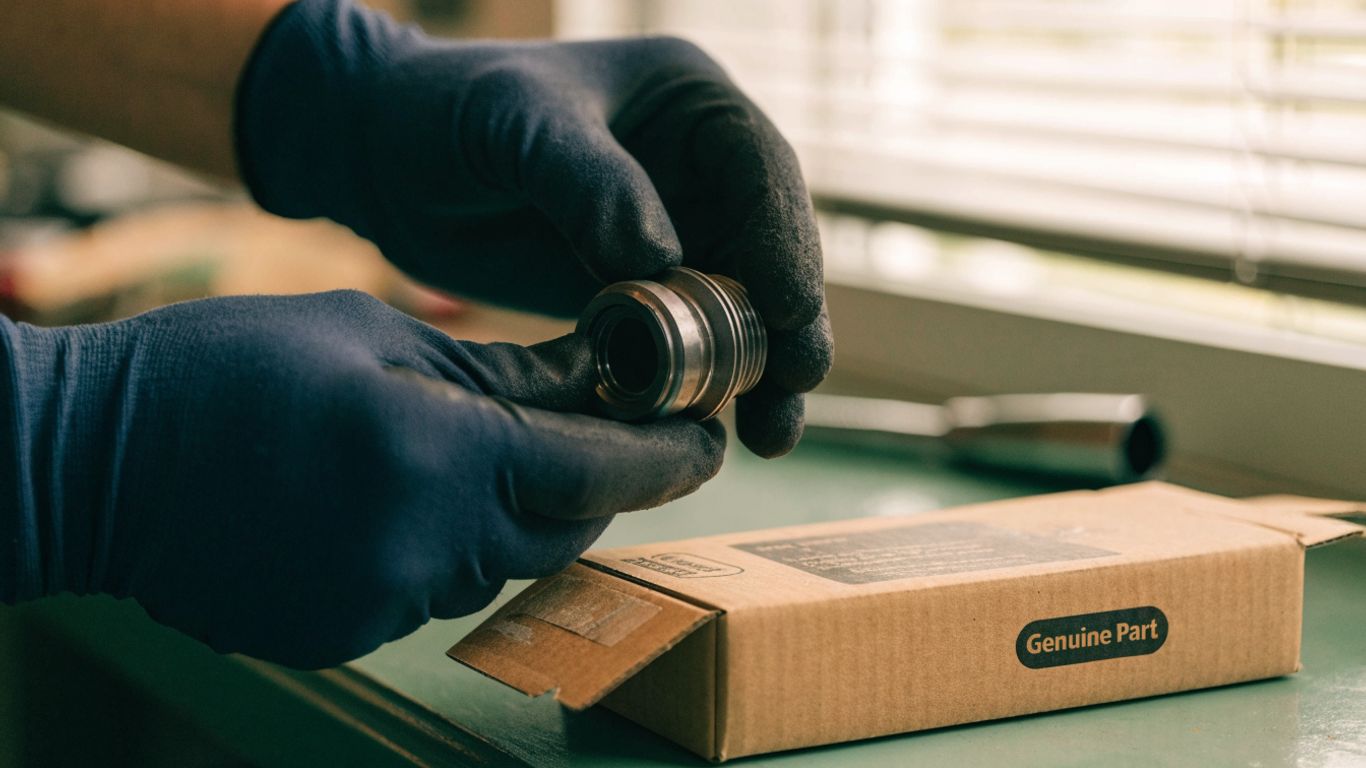
The word “genuine” can mean different things in casual listings, so look for details that explain exactly what is being sold. Check the manufacturer, packaging, part references, and any stated authenticity information rather than relying on a headline alone. Car Parts Supplier connects customers with quality used, genuine, and aftermarket parts, so make sure the listing’s description matches the type you want. If a detail is missing, ask before ordering.
Look for clear manufacturer and authenticity details
A useful listing identifies the part and makes clear whether it is represented as genuine, used, or aftermarket. Look for a manufacturer name, part number, condition notes, and photographs that let you understand what is being offered. Images can help, but they may not prove authenticity or show the exact item that will be sent. When the description is vague, request confirmation in writing before you rely on it.
Ask how the seller sources its parts
If authenticity matters for your purchase, ask where the part comes from and what information supports its description. The seller may be able to explain whether it is new or used and how it identifies the manufacturer or part number. Keep the answer alongside the listing, particularly if the wording is not explicit. A straightforward response is more useful than a broad assurance with no details.
Distinguish genuine parts from aftermarket alternatives
Genuine and aftermarket parts are different categories, and a seller may offer both. Neither the listing title nor a familiar-looking image should decide which one you are buying; read the description and condition notes. If you require a genuine part, ask the seller to confirm that exact point rather than accepting a similar replacement by default. Then weigh the option against your needs and budget.
Choose a trustworthy online seller
A clear listing is only part of a confident purchase; you also need to know who is taking the order and how to reach them. Check whether the site provides useful business details and a way to ask questions before you pay. Look for recent customer feedback, but read it as context rather than a guarantee of your own experience. A little time spent reviewing the seller can make the rest of the purchase feel less uncertain.
Check business details and contact options
Look for the business name, location or service area, and practical contact options such as email, phone, or a support form. Check whether the seller can answer fitment and condition questions before checkout. If you need the part by a certain date, ask about availability and delivery rather than assuming the listing is current. Keep the seller’s response so you can refer back to the details later.
Read recent customer reviews with care
Recent reviews may help you spot recurring themes in communication, packing, or delivery. Read beyond the overall rating, and consider whether reviewers describe a similar kind of purchase. One review, positive or negative, does not establish what will happen with your order. Use feedback alongside the seller’s published terms and your own questions.
Review payment security and privacy information
Before entering payment or vehicle details, check that the checkout is secure and that the site explains how it handles personal information. Use a payment method whose terms you understand, and avoid sending unnecessary personal details through informal channels. If a page asks for information that seems unrelated to the purchase, pause and contact the business through its listed support option. These checks help you make an informed decision without assuming every site handles data the same way.
Compare prices and product listings
A low displayed price does not always show what you will pay or exactly what will arrive. Compare similar parts by their condition, included components, and delivery costs, not just the first number on the page. Car Parts Supplier aims to make finding the right part fast and affordable across Melbourne, Sydney, Brisbane, and nationwide; as with any purchase, check the individual listing and total before deciding. A simple side-by-side comparison can bring important differences into view.

Compare the full cost, including shipping and taxes
Check the price at checkout, including shipping and any taxes or other charges shown before payment. Delivery costs can differ with the size of a part, destination, or delivery option, so compare the final amounts for the same item and condition. This quick comparison helps explain why one listing may appear cheaper at first. Use the figures shown at checkout rather than estimating from the headline price.
| What to compare | Why it matters | What to check |
|---|---|---|
| Part price | The listed price may not be the final cost | Confirm the amount at checkout |
| Shipping | Delivery charges can change the total | Check the cost for your address |
| Taxes or fees | Additional charges may appear before payment | Review the order summary |
| Condition | New and used parts may not be equivalent | Compare condition notes carefully |
After comparing these items, judge the complete offer rather than the lowest starting price. If a charge or condition is unclear, ask the seller to explain it before you submit payment.
Check what the listing says is included
Read the full description to see whether the price covers one part, a set, or any listed fittings or accessories. Photographs may show nearby components that are not included, so rely on the written description or ask for clarification. Confirm the condition and quantity as well, especially if you need matching pieces. Knowing what is in the package helps you avoid paying for an assumption.
Be cautious of unusually low prices or vague descriptions
A price far below other listings for a similar part may have a straightforward explanation, such as condition or what is included, but you should establish that before buying. Vague descriptions make it harder to judge compatibility, authenticity, and value. Ask for the missing information and compare the response with the listing. If you still cannot tell what is being sold, consider waiting rather than rushing into checkout.
Understand shipping, returns, and warranty terms
Delivery and after-sale terms affect the value of an order as much as the listed price does. Read the relevant policies before paying, particularly if a part is bulky, time-sensitive, or difficult to return. Keep a copy of the terms that apply at the time of purchase. Knowing the process in advance makes it easier to decide whether the order suits your needs.
Check delivery estimates and tracking options
Review the estimated dispatch and delivery time, and note whether the estimate depends on the part being available. Check whether tracking is provided and how the seller communicates changes to an order. If timing matters, ask for an update before checkout instead of treating an estimate as a firm arrival date. Make sure the delivery address and contact details are correct.
Review return conditions before ordering
Return policies can depend on the reason for the return, the condition of the part, and how soon the seller is notified. Check whether the buyer or seller arranges return shipping and whether any conditions apply to used or specially sourced items. Do not assume that an incorrect fitment, a change of mind, and a damaged delivery are handled identically. If any term is unclear, ask for it in writing before ordering.
Confirm warranty coverage and who handles claims
Check whether the listing states a warranty, what it covers, and how long it applies. Find out who to contact if there is a problem and what records or inspection may be required for a claim. Keep the policy and any written answers with your order confirmation. A clear process can help you understand your options, though the terms themselves determine what is covered.
Place your order and check the part on arrival
Once you have confirmed the fitment and reviewed the seller’s terms, take a final moment to check the order details. Save the confirmation and any messages that clarify the part number, condition, or included items. When the parcel arrives, inspect it before installation and compare it with the listing. If something does not match, contact the seller promptly and keep the packaging until the issue is resolved.
Keep your order confirmation and fitment details
Save the confirmation email, invoice, listing details, and any messages exchanged with the seller. Keep the VIN or other fitment information you supplied and the part number that was confirmed. These records make it easier to describe the order accurately if you need help. Store them somewhere you can find them without relying on the listing remaining online.
Inspect the packaging and part before installation
Check the parcel for visible damage and compare the part with the description, number, condition, and quantity on your order. Take photographs if the packaging or item appears damaged or different from what you expected. Avoid installing a part until you are satisfied it is the item you ordered and it appears suitable. If you spot a concern, preserve the packaging and contact the seller before making changes to the part.
Contact the seller promptly if something is wrong
If the part is missing, damaged, or does not match the agreed details, write to the seller as soon as you can. Include your order number, a concise description of the issue, and relevant photographs or part references. Ask what steps to take next, and avoid discarding packaging or attempting a repair while the seller reviews the matter. Keep copies of the conversation and follow the stated returns or warranty process.
Conclusion
Buying genuine auto parts online in Australia is less of a gamble when you verify fitment, check what the listing actually promises, and understand the seller’s terms before paying. Save your records, inspect the delivery, and ask questions whenever an important detail is unclear. A measured purchase is often the simplest way to get the right part with fewer surprises.