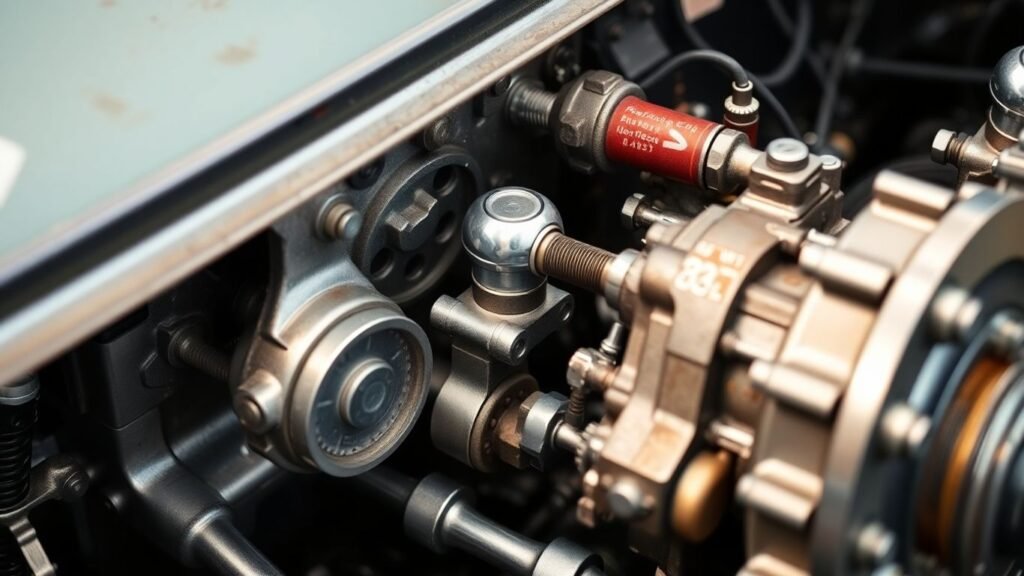
The classic Mini is a car known for its clever design, and a big part of that is its unique gearbox and transmission system. Unlike most cars, the Mini’s gearbox is actually tucked right inside the engine’s oil sump. This setup, while compact, has a long history with different versions and upgrades available. Whether you’re looking at an original model or thinking about modifications, understanding the Mini gearbox and transmission is key to appreciating these iconic vehicles.
Key Takeaways
- The Mini’s distinctive gearbox-in-sump design was a space-saving innovation, though it’s less common in modern cars.
- Mini gearboxes have evolved over the years, from early three-synchro units to later four-synchro and A+ types, each with internal differences.
- Choosing between a manual and an automatic transmission impacts the driving feel, with manuals offering more engagement and automatics providing convenience.
- Upgrading components like drop gears and choosing specific gear ratios can significantly alter a Mini’s performance and driving characteristics.
- Regular maintenance, especially oil changes, is vital for the longevity of both manual and automatic Mini gearboxes, as they share engine oil.
Understanding The Mini Gearbox and Transmission System
When you think about the classic Mini, one of the first things that comes to mind is its incredibly compact design. Sir Alec Issigonis really packed a lot into a small space, and the gearbox is a prime example of this. Unlike most cars where the gearbox sits behind the engine, the Mini’s transmission is tucked right up inside the engine’s oil sump. This unique ‘gearbox-in-sump’ layout is what makes the Mini so distinctive, and it’s a design that’s been seen in other cars over the years, though it’s not common today outside of motorcycles.
The Unique Mini Gearbox-in-Sump Design
This whole setup means the Mini needs a special set of gears, called drop gears or transfer gears, to get power from the engine’s crankshaft down to the gearbox. Without these, the transmission would be spinning in the opposite direction to the engine, which wouldn’t work. The drop gears essentially redirect the power flow, allowing for that super-compact arrangement. It’s a clever bit of engineering that really defines the Mini’s mechanical character.
Evolution of Mini Gearbox Internals
Over the years, the Mini’s gearbox saw quite a few changes. Early models, starting in 1959, came with a three-synchro gearbox. The first gear wasn’t always the smoothest to engage, and the synchro rings, made of brass, wore out pretty quickly. By 1962, they improved this with independent balk rings, which were much better. These early gear sets were known as ‘A-type’. Then, in September 1964, the ‘B-type’ gears came along. They had a less steep angle on the gear teeth and used needle roller bearings instead of bronze bushes for second and third gears, making them a bit more robust.
| Gear Type | Synchro Type | First Gear Engagement | Bearing Type (2nd/3rd) |
|---|---|---|---|
| A-Type | Three-Synchro | Less smooth | Bronze Bush |
| B-Type | Three-Synchro | Improved | Needle Roller Bearings |
Manual vs. Automatic Transmission Choices
For most of its life, the Mini was available with a manual gearbox. This was the standard and what most people associate with driving a classic Mini – that direct, engaging feel. However, there were also automatic options available, though they were less common. These offered a more relaxed driving experience, particularly in city traffic, but the manual transmission is really what gives the Mini its spirited character. The choice between manual and automatic really comes down to what kind of driving experience you’re after.
Key Components of the Mini Gearbox and Transmission
So, we’ve talked about the general idea of the Mini’s gearbox being tucked right into the oil sump, which is pretty neat for saving space. But what actually makes it all work? There are a few bits and pieces that are really important to understand.
The Role of Drop Gears (Transfer Gears)
First up, let’s talk about the drop gears, sometimes called transfer gears. These aren’t something most cars have in the same way. Because the Mini’s gearbox is right under the engine, these three little gears act as a middleman. They take the power spinning from the crankshaft and redirect it downwards into the gearbox. Without them, the gearbox would be spinning the wrong way relative to the engine. They’re a pretty clever solution to package the whole drivetrain so compactly. For standard engines, the factory drop gears are usually fine. But if you start pushing more power, especially over 100 horsepower, these can become a weak spot. The bearings in the idler gear, in particular, have been beefed up over the years. Early models had smaller bearings that couldn’t handle much extra torque, while later A+ models got significantly stronger ones.
Understanding Gear Ratios and Final Drive
Next, we have gear ratios and the final drive. Think of gear ratios like the different speeds your bike gears let you pedal at. Lower gears give you more power to get moving or climb hills, while higher gears let you go faster on flat ground. The Mini has several sets of gears inside the gearbox that do this. The final drive is the last step before power goes to the wheels. It’s a set of gears that determines the overall ratio between the engine’s speed and the wheel’s speed. Choosing the right combination of gearbox ratios and final drive is key to how your Mini feels. Want quicker acceleration? You might want shorter ratios. Aiming for better highway cruising? Longer ratios are the way to go. Getting this balance wrong can lead to that jarring feeling when you shift gears, where the engine speed drops way too much.
Synchromesh Systems and Their Importance
Finally, there’s the synchromesh system, or ‘synchro’ for short. This is what makes shifting gears smooth. Before synchros were common, drivers had to
Historical Development of Mini Transmissions
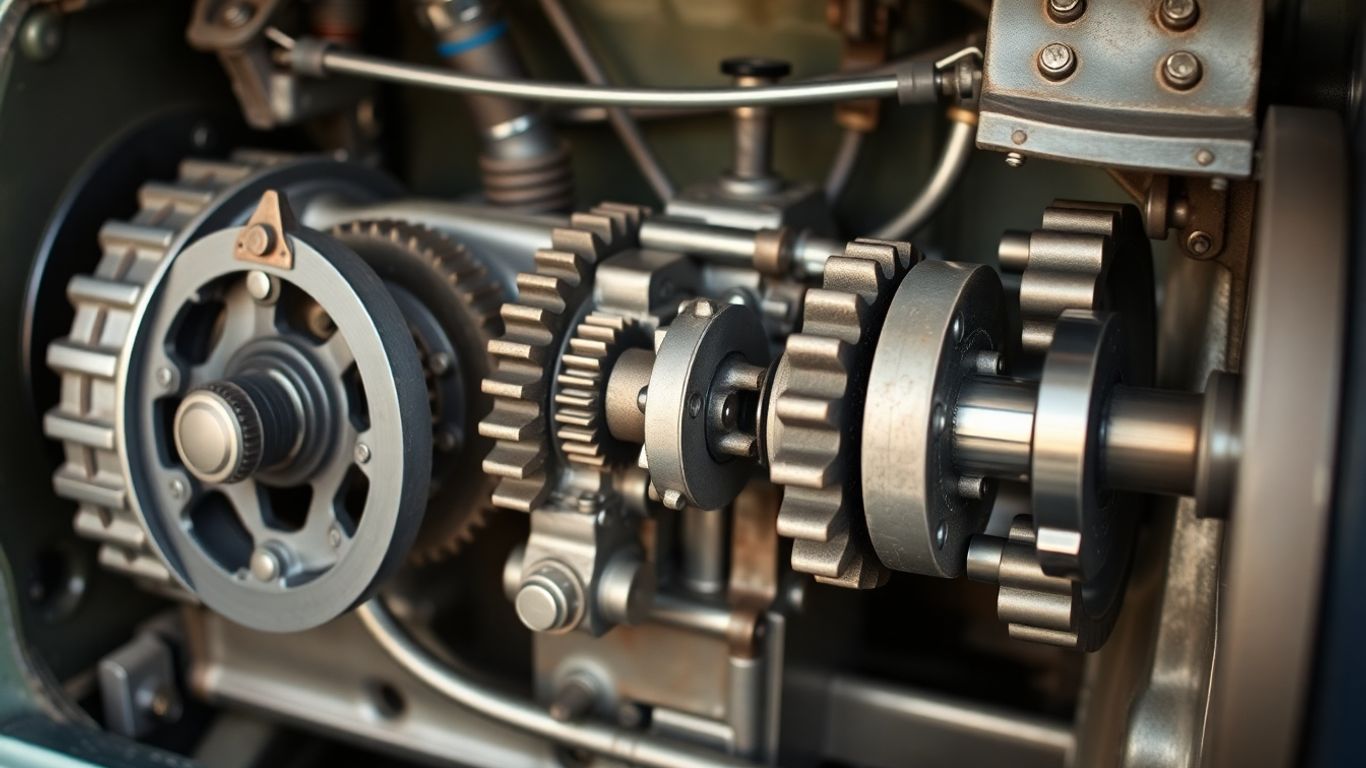
The Mini’s gearbox, famously integrated into the engine’s oil sump, was a stroke of genius for packaging, but its evolution over the years saw significant changes. It wasn’t always the slick-shifting unit we might imagine.
Early Three-Syncro Gearboxes (A-Type and B-Type)
When the Mini first hit the roads, it came with a three-syncro gearbox. This early design had a bit of a reputation, especially for first gear, which could be a bit hit-or-miss. The gears themselves used brass ‘syncro cone’ rings to help match speeds, but these didn’t hold up too well over time. Things got a little better in 1962 with the introduction of the independent balk ring, which is still used today. This setup was known as the ‘A-type’ gear set. Then, in September 1964, the ‘B-type’ gears came along, replacing the ‘A-type’. The main differences were in the angle of the helical cut on the gears – ‘A-type’ had a steeper angle. Also, second and third gears in the ‘A-type’ ran on bronze bushes, while the ‘B-type’ used needle rollers. The mainshafts were different too, affecting how they were supported. You couldn’t just mix and match these two types, though some early Cooper S models had a special laygear that allowed ‘B-type’ first and reverse gears.
| Gear Type | Synchro Rings | 2nd & 3rd Gear Bearings | Mainshaft Bearing |
|---|---|---|---|
| A-Type | Brass Cone | Bronze Bushes | Fixed Sleeve Bearing |
| B-Type | Independent Balk Ring | Needle Rollers | Caged Needle Roller Bearing |
The early Mini gearboxes, while innovative for their time, were a work in progress. The transition from the A-type to the B-type gears marked a step towards improved durability and smoother operation, though first gear remained a challenge for a while.
The Introduction of the Four-Syncro Gearbox
Finally, towards the end of 1968, the all-syncro, or four-syncro, gearbox arrived. This was a big deal! It had completely different internals and a new casing to accommodate a separate first gear, and it still used the remote aluminum gear-change lever housing. This setup stayed pretty much the same until 1973. That’s when the remote housing was swapped out for a rod-change system. Instead of the external aluminum housing, two rods were used – hence the name ‘rod-change’. The internal gear selection mechanism was also simplified.
A+ Type Gears and Later Innovations
Around 1982, the A+ type gears were introduced. These were designed to run quieter. You can spot them by a groove around the center peaks of the teeth, and they have a sharper point to the tooth profile compared to the blunter tips on earlier gears. While these internal changes improved refinement, the fundamental design remained. Later on, some companies started offering five-speed conversions, often from specialists like Jack Knight, which really helped take the strain out of longer journeys, especially on motorways.
Performance and Upgrades for Mini Gearboxes
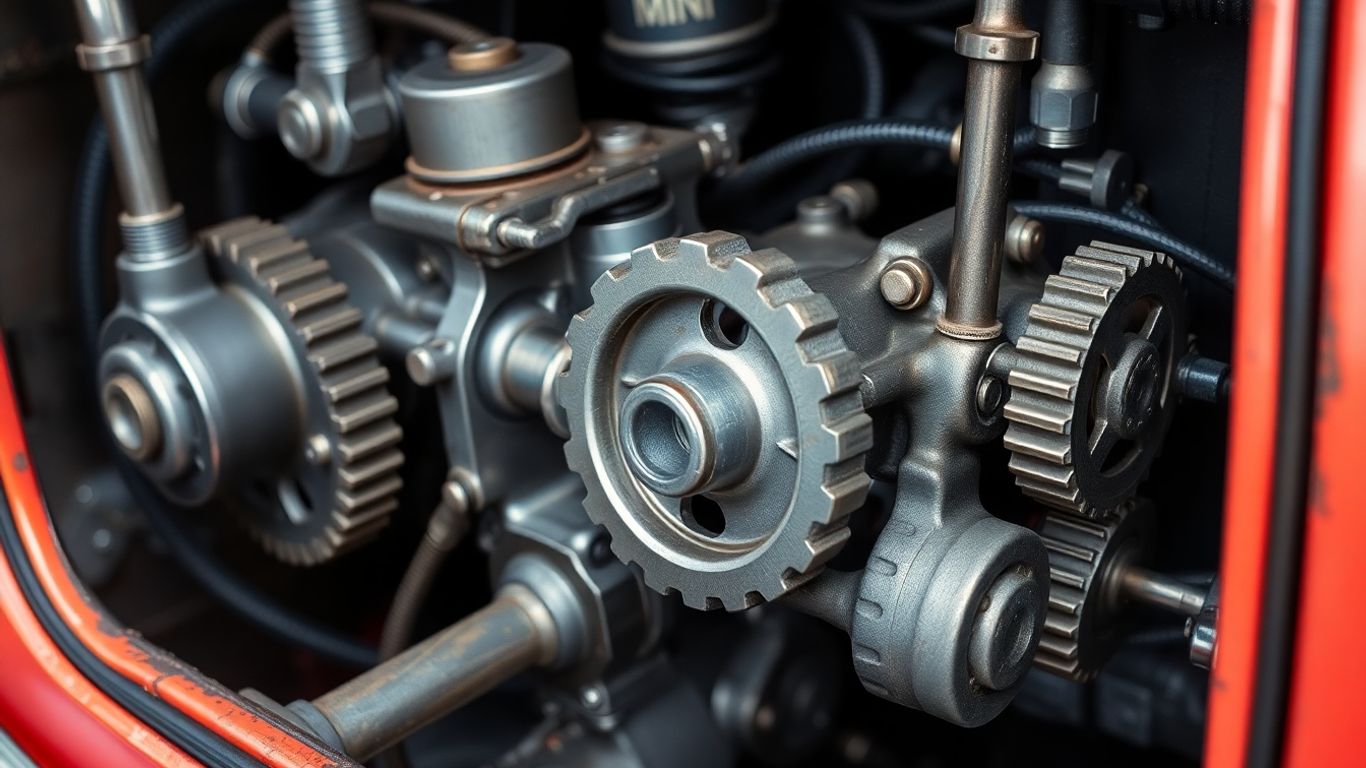
So, you’ve got your Mini running sweet, maybe even got a bit more pep in its step. Now, let’s talk about making that gearbox keep up and maybe even give you a bit more thrill on the road. It’s not just about raw power; it’s about how that power gets to the wheels and how it feels when you’re driving.
Choosing Optimal Gear Ratios for Performance
Picking the right gear ratios is a bit like choosing the right shoes for a run. You wouldn’t wear hiking boots for a sprint, right? For a Mini, it’s similar. If you want quicker acceleration off the line, you might look at shorter ratios. This means the engine revs up more between gear changes, giving you that punchy feel. On the flip side, if you do a lot of highway driving and want to cruise more comfortably without the engine screaming its head off, longer ratios are the way to go. They let you cover more ground with each engine revolution. The trick is finding that sweet spot that matches your engine’s power and how you actually use the car. Get it wrong, and you might feel a big jump between gears, like the car’s taking a breath before it can really get going again. That’s where the final drive ratio plays a big part too; it’s all connected.
When to Upgrade Your Mini Drop Gears
These little drop gears, or transfer gears as some call them, are pretty important. They’re the middle men, taking power from the crank and sending it down to the gearbox. For a standard engine, the ones that came from the factory are usually fine. But, if you’ve started tweaking the engine for more power, especially if you’re pushing past 100 horsepower, those original drop gears might start to feel the strain. The bearings inside the idler gear are often the first weak point. Early Minis had smaller bearings, and while they worked okay for the time, they don’t handle extra torque very well. Later models, especially the A+ versions, got beefier bearings and shafts, which helped a lot. If you’re building a more serious performance engine, upgrading these drop gears is a smart move for reliability.
| Gearbox Type | Idler Gear Bearing OD | Idler Gear Shaft Diameter | Notes |
|---|---|---|---|
| Early 3-Syncro | 1.000" | 0.750" | Smallest bearings, prone to failure |
| Late 4-Syncro | 1.059" | 0.750" | Improved strength |
| A+ Type | 1.375" | 0.875" | Significantly stronger |
| Roller Bearing Kit | 2.000" | N/A | Replaces needle bearings entirely |
The Benefits of Straight-Cut Drop Gears
Now, for the real enthusiasts, especially those looking at competition or just wanting that classic rally car sound, straight-cut drop gears are a popular choice. They’re not just for the noise, though. These gears are generally stronger than the standard helical-cut ones. Because of how the teeth are cut, they tend to handle power more directly and with less sideways force. Some folks reckon you can even pick up a few extra horsepower just by switching to straight-cut gears, especially if you pair them with a straight-cut gear set in the main gearbox. If your engine is making serious power, especially over that 100bhp mark, straight-cut drop gears are a really good idea to keep things reliable. They’re built tough.
Upgrading the drop gears, especially to a straight-cut design with stronger bearings, is a solid step for any Mini owner looking to push their engine beyond standard tune. It’s about making sure the power you’ve worked to create can actually get to the road without breaking things. Plus, that distinctive whine is pretty cool.
Maintenance and Reliability of Mini Gearboxes
Keeping your Mini’s gearbox happy is pretty important, especially since it’s all tucked away in the engine’s oil sump. It’s a clever design, sure, but it means the gearbox shares its oil with the engine. So, what does that mean for you? Well, regular oil checks are a must. Just pull out the dipstick and see if the oil looks nice and golden or if it’s gone dark and sludgy. If it’s the latter, it’s probably time for a change. Using the right kind of oil, usually a 20W50 mineral oil, is key here. It needs to work for both the engine and the gearbox.
Essential Maintenance for Manual Transmissions
Manual Minis are generally tough cookies. With consistent care, like those oil changes we just talked about and keeping an eye on the clutch, your manual gearbox can last for ages. However, they do have a bit of a reputation for synchromesh issues. You might notice a bit of a crunch when you shift gears, or maybe they just don’t slide in as smoothly as they should. This was more common in earlier models, but it’s something to watch out for. A little whine is normal, it’s just part of the Mini charm, but if you start hearing a hissing sound, that could be worn bearings starting to cause trouble.
Upkeep Requirements for Automatic Transmissions
If you’ve got an automatic transmission in your Mini, it needs its own kind of attention. Keeping the automatic transmission fluid fresh is really important. If you skip this, you could end up with bigger problems down the line with the clutches or the gearbox itself. Some folks who really know their Minis say that if you take good care of an automatic, it can actually last longer than a manual. Pretty interesting, right?
Common Issues and Troubleshooting
So, what are the usual suspects when it comes to Mini gearbox problems? Well, as mentioned, synchromesh wear is a big one. You’ll feel it when you try to shift. Worn bearings are another common culprit, often making a hissing noise. Early Minis didn’t even have synchromesh on first gear, so grinding there was just part of the experience back then! If you’re hearing odd noises, it’s always a good idea to get it checked out. Sometimes it’s just a simple fix, but other times it might mean a bigger job, like replacing bearings or even a full gearbox rebuild. A full rebuild can set you back a fair bit, but it’ll get your Mini shifting like new again.
The gearbox is often considered the most delicate part of a Mini’s mechanical setup. While they were never perfectly silent, a bit of gear noise is characteristic. However, any significant changes in sound, like grinding or loud whining, usually point to something needing attention. Regular checks and prompt action can prevent minor issues from becoming major headaches.
Driving Experience and Transmission Suitability
When you’re thinking about a classic Mini, the gearbox choice really changes how the car feels on the road. It’s not just about getting from A to B; it’s about the whole experience.
Manual Transmission: The Engaging Drive
For a lot of folks, the manual gearbox is what makes a Mini a real Mini. You get a direct connection to the car, feeling every shift and every bit of engine response. It’s that raw, connected feel that enthusiasts talk about. On a twisty country road, having full control over the gears lets you really play with the engine’s power band. It’s a more involved way to drive, and for many, that’s the whole point. You can really feel the car working with you.
Automatic Transmission: Convenience in City Driving
Now, if your Mini is going to spend most of its time in town, dealing with traffic lights and stop-start jams, an automatic might be your best bet. It takes a lot of the work out of driving in busy areas. No more constant clutch-pedal work or shifting gears every few seconds. This makes city driving much less tiring. It’s a more relaxed way to get around, and honestly, for some people, that convenience is worth more than the extra engagement a manual offers. It’s a bit like the difference between riding a bike with gears and a scooter.
Suitability for Long-Distance Journeys
Thinking about taking your Mini on a longer trip? Well, it depends on the specific setup. Later models, especially those with the A+ engine and multi-point fuel injection, often came with slightly taller gearing. This makes them a bit more comfortable for cruising on the highway at modern speeds. They don’t have to work quite as hard, meaning the engine spins a bit slower, which can be nicer on a long drive. A manual gearbox, especially with well-chosen gear ratios, can also be great for open roads, letting you keep the engine in its sweet spot. But if you’re looking for the absolute easiest long-distance cruiser, a well-maintained automatic might surprise you with its relaxed nature, even if it’s not quite as refined as a modern car’s automatic.
Choosing the right transmission isn’t just about what’s available; it’s about matching the car’s character to how and where you plan to drive it. A manual offers a more spirited connection, while an automatic prioritizes ease, especially in urban environments.
Wrapping Up Your Mini’s Drivetrain
So, we’ve looked at the bits and pieces that make your classic Mini’s gearbox and transmission work. From the clever drop gears that fit everything together to the different types of gear sets and how they’ve changed over the years, it’s a pretty neat system. Whether you’ve got a manual or an automatic, keeping it maintained with the right oil and checking for noises is key. Choosing the right setup for how you drive, whether it’s city cruising or open-road adventures, really makes a difference in how much you enjoy your Mini. Keeping these systems in good shape means your classic car will keep running and sounding great for a long time to come.