Key Takeaways
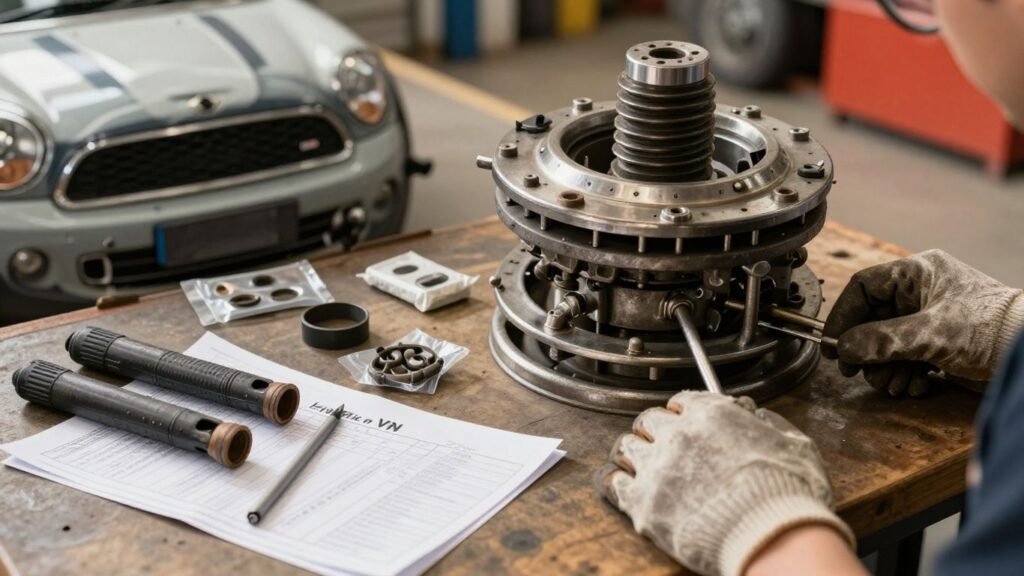
Buying a used differential for a Countryman calls for more than matching a model name. The drivetrain, identification details, condition, and seller terms all deserve a close check.
- Match the differential to the Countryman’s exact year, generation, drivetrain, and transmission.
- Use the VIN and part-number information to confirm fitment before paying.
- Treat stamps, labels, photos, and vehicle history as essential evidence of authenticity.
- Inspect the housing, gears, bearings, seals, mounts, corrosion, and storage condition.
- Confirm installation requirements, return terms, and post-fitting checks with a qualified technician.
Understand the Mini Cooper Countryman differential
The differential allows driven wheels to rotate at different speeds while the vehicle turns. It works within the drivetrain to transmit engine torque and maintain smooth movement through corners. Its location and specification depend on the Countryman’s drivetrain configuration, so a part that looks similar may still be unsuitable.
What the differential does in the drivetrain
A differential receives drive from the transmission or related final-drive components and distributes it to the wheels. During a turn, the outside wheel travels farther than the inside wheel, and the differential accommodates that difference. This reduces tyre scrub and helps the vehicle corner without binding through the driven axle.
Countryman models and drivetrain configurations
Countryman versions vary by model year, generation, engine, transmission, and whether they use front-wheel drive or all-wheel drive. Those details affect the differential assembly and its connections. Begin with the vehicle’s exact build information rather than relying on a broad description such as “Countryman differential.”
Front, rear, and all-wheel-drive differential differences
A front differential may be integrated with the transaxle, while a rear differential is a separate assembly on vehicles with a driven rear axle. All-wheel-drive versions can therefore require more than one compatible final-drive component. Housing shape, mounting points, output arrangements, gearing, and electronic interfaces may all differ between applications.
Why correct specification matters for fitment
A differential can be mechanically sound and still fail to fit the vehicle correctly. Exact specification matters most when ratios, mounting points, flanges, or transmission interfaces differ. Confirming those details before purchase is usually less costly than adapting an incorrect part after delivery.
A matching part number is stronger evidence than a familiar-looking housing.
That principle is useful when comparing photographs and listings. Appearance can support a decision, but it should not replace vehicle-specific identification.
Identify the exact differential your Countryman needs
Before searching for Used Mini Cooper Countryman differentials Ballarat – genuine parts only, collect the vehicle information that defines the required assembly. The model badge alone is not enough, particularly when several drivetrain combinations were sold across a generation. Write down the details and send them to the supplier with your enquiry.
Matching the model year and generation
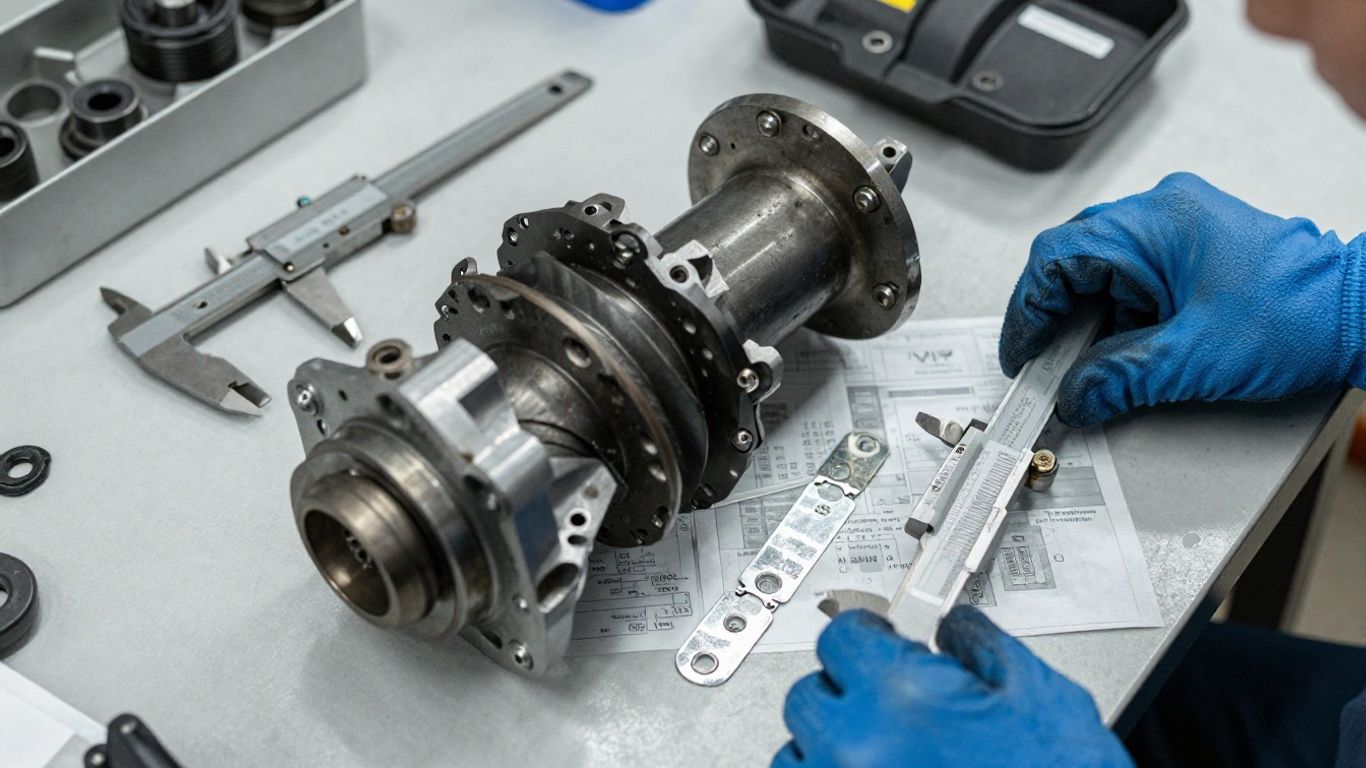
Record the model year, production period, generation, engine, and trim where available. A change in generation or drivetrain can bring different housings, ratios, mountings, or connections. If the registration year and build year differ, use the build information and VIN rather than guessing from the registration date.
Checking the VIN and drivetrain details
The VIN gives the supplier a more reliable starting point than a verbal description. Confirm whether the vehicle is front-wheel drive or all-wheel drive, and note the transmission type and engine designation. Photos of the existing differential and its mounting area can also help resolve uncertainty.
Comparing OEM and manufacturer part numbers
Ask for every number visible on the replacement assembly, including stamped codes and supplier labels. Compare those details with the numbers associated with the vehicle, while allowing for superseded or exchanged numbers. A supplier should explain any difference rather than asking you to accept an unexplained match.
Confirming transmission and final-drive compatibility
The transmission and final-drive ratio must be considered together. Even if the casing bolts into place, an incompatible ratio or output arrangement can create driveline stress, noise, or poor operation. Have the intended installer review the numbers before the purchase becomes difficult to reverse.
Verify that a used differential is genuine
“Genuine” should be treated as a claim that needs evidence, not as a reassuring word in an advertisement. Ask what the seller means by genuine, whether the unit is original equipment, and whether it has been repaired or rebuilt. Clear answers, consistent photographs, and traceable details make the transaction easier to assess.
What genuine Mini and OEM parts mean
A genuine Mini part is supplied as an original part for the vehicle marque, while OEM commonly refers to equipment made to the vehicle manufacturer’s specification or by an original-equipment supplier. The terms can be used differently by sellers, so request the precise description in writing. Do not assume that “OEM quality” means the assembly is an original, unused part.
Reading identification stamps and labels
Look closely at casing stamps, barcode labels, casting marks, serial numbers, and any attached tags. The markings should be legible and consistent with the photos and the seller’s written description. Ask for close-up images before payment if the listing only shows a distant or dirty assembly.
Distinguishing genuine parts from replicas and rebuilt units
A replica, used original, and rebuilt original are different purchase categories. A rebuilt unit may be a practical option, but it should be described as rebuilt and accompanied by information about the work completed. If a seller avoids saying whether bearings, seals, gears, or the housing were replaced, treat that uncertainty as part of the buying risk.
Requesting provenance and vehicle history
Ask which vehicle the differential came from, its recorded mileage if known, and why it was removed. A dismantler may be able to provide donor-vehicle details, photographs, or an inventory record. Provenance does not prove perfect condition, but it gives you a basis for comparing the unit with your own Countryman.
Assess the condition of a used differential
Condition is more than a clean exterior. A differential may have been removed from a damaged vehicle, stored outdoors, or left with degraded fluid inside. Inspection should cover the housing and internal clues, with special attention to anything that could affect installation or warranty coverage.
Inspecting the housing for cracks and impact damage
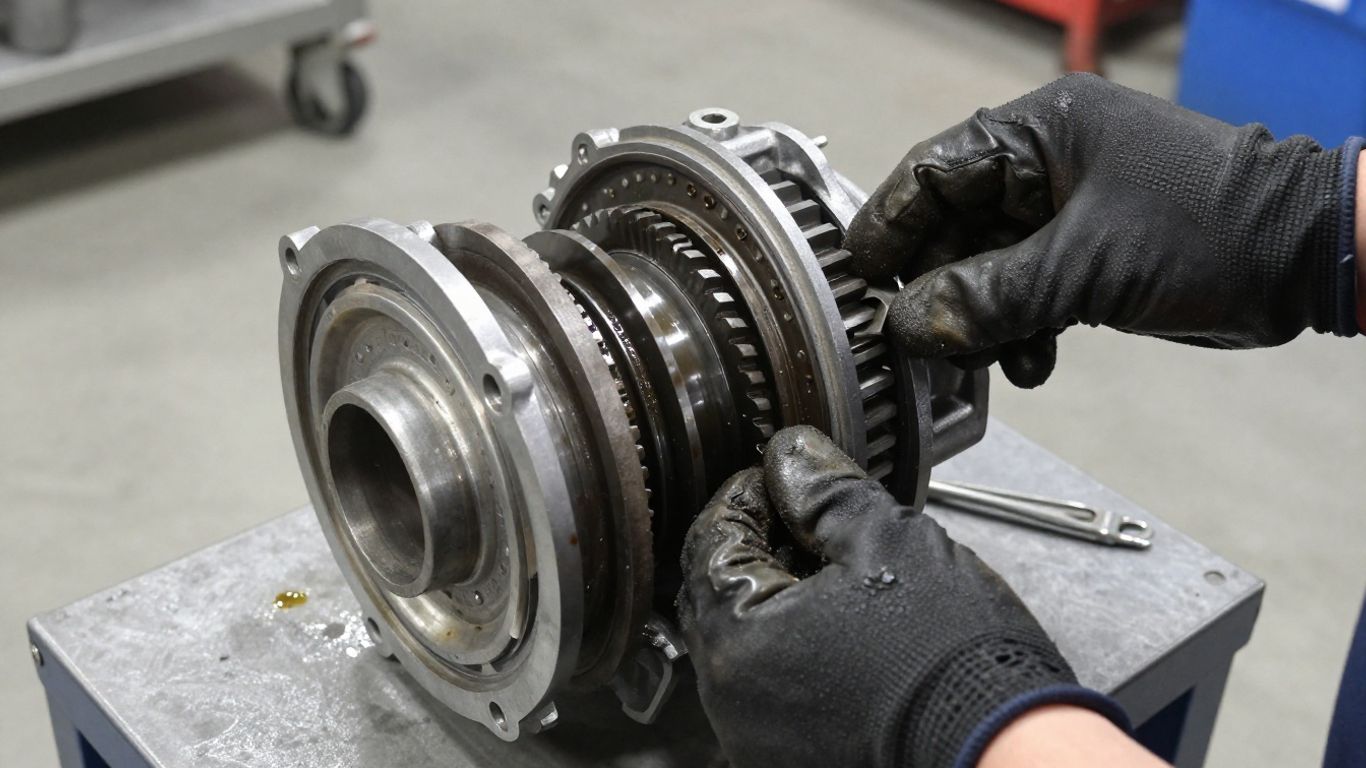
Examine the casing around mounting ears, covers, seams, drain points, and output areas. Look for cracks, fresh welds, deep gouges, distortion, and impact marks that could indicate collision damage. Ask for photographs from several angles, including the underside, rather than judging the part from one polished view.
Checking gears, bearings, seals, and mounting points
If inspection access allows, check the gear teeth for pitting, chips, abnormal wear, or discolouration. Turn the input and outputs by hand and note roughness, excessive play, or tight spots, while remembering that a bench check cannot replace a technician’s assessment. Inspect seals and mounting points for damage because small defects can create installation delays.
The following comparison keeps the main inspection areas in view when a supplier provides limited information:
| Area | What to check | Why it matters |
|---|---|---|
| Housing | Cracks, distortion, impact marks | Structural damage can prevent safe fitment |
| Gears | Chips, pitting, uneven wear | Internal damage may cause noise or failure |
| Bearings and seals | Roughness, play, leakage | Wear can require immediate replacement |
| Mounts and outputs | Bent points, damaged flanges | Connection problems can stop installation |
Use the table as a conversation guide, not as a substitute for dismantling or professional testing. A seller who can answer each area clearly is easier to deal with than one who supplies only a generic condition statement.
Looking for leaks, corrosion, and contamination
Check for oil residue around seals, covers, and joints, as well as rust on fasteners and exposed surfaces. Milky fluid, metallic particles, sludge, or heavy sediment can point to water entry, overheating, or internal wear. Surface dirt is not automatically serious, but contamination inside the housing deserves careful explanation.
Understanding mileage and storage risks
Known mileage helps place wear in context, although it does not guarantee a healthy unit. Long storage can affect seals, expose machined surfaces to corrosion, and leave old lubricant settled in the housing. Ask how the differential was drained, protected, and stored, and keep those answers with the purchase record.
Buy used Mini Cooper Countryman differentials in Ballarat
A local Ballarat purchase can make inspection and collection more convenient, but locality does not remove the need for verification. Treat the supplier conversation as part of the technical check. Send the VIN and required specifications before discussing a final price.
Questions to ask a local parts supplier
Ask for the donor vehicle, mileage, part numbers, condition, included hardware, and reason for removal. Confirm whether the differential is original, used, rebuilt, or modified. It is also sensible to ask whether the supplier has inspected the rotation, casing, mounts, and visible leaks.
Comparing local pickup with freight delivery
Local pickup may let you inspect the assembly and reduce handling during transport. Freight can be useful when the right part is not nearby, but it adds packaging, insurance, and damage-reporting considerations. Compare the total delivered cost rather than looking only at the advertised part price.
Confirming stock, pricing, and return terms
Get the stock status and quoted price in writing, along with what is included in the assembly. Confirm the return period, restocking charges, warranty conditions, and who pays freight if the part is incorrect or damaged. A clear agreement is particularly valuable when compatibility cannot be proven until the old unit is removed.
Protecting the differential during transport
The assembly should be drained where appropriate, capped against leakage, wrapped against moisture, and supported so its mounting points do not carry the full shipping load. Photograph the packaging before opening and record any visible freight damage immediately. Do not discard the packaging until fitment and initial testing are complete.
Prepare for installation and final compatibility checks
Installation is the point at which identification and condition claims are tested. A qualified technician can compare the replacement with the removed unit before the vehicle is fully reassembled. Allow time for fluids, seals, fasteners, and any related service items rather than treating the differential as a simple swap.
Replacing seals, fluids, and related hardware
Ask the technician which seals, gaskets, fluids, bolts, and one-time-use fasteners should be renewed. The correct fluid specification and fill procedure should follow the vehicle’s service information. Reusing a damaged seal or fitting contaminated fluid can undermine an otherwise suitable used assembly.
Having a qualified technician inspect the drivetrain
The technician should compare mounting points, outputs, connectors, and identification details before installation. They can also inspect surrounding components for wear that may have contributed to the original differential’s problem. If the vehicle has an all-wheel-drive system, the broader driveline deserves attention rather than only the replacement housing.
Checking backlash, noise, and vibration after installation
After installation, check for leaks and listen for unusual whine, clunking, humming, or vibration under different load and turning conditions. Any abnormal behaviour should be investigated promptly instead of being dismissed as normal bedding-in. A careful road test and follow-up inspection provide useful evidence if a return or warranty conversation becomes necessary.
Keeping records for warranty and future servicing
Keep the invoice, part numbers, photographs, donor information, mileage statement, warranty terms, and installation notes together. Record the fluid used and the date of fitting as well. These details help with future servicing and make it easier to explain the vehicle’s history to another technician or supplier.
Conclusion
A sound purchase begins with exact identification and ends with careful installation checks. For Used Mini Cooper Countryman differentials Ballarat – genuine parts only, verify the drivetrain details, authenticate the assembly, inspect its condition, and agree on return terms before money changes hands. That measured process gives a used differential the best chance of being the right part for the vehicle.